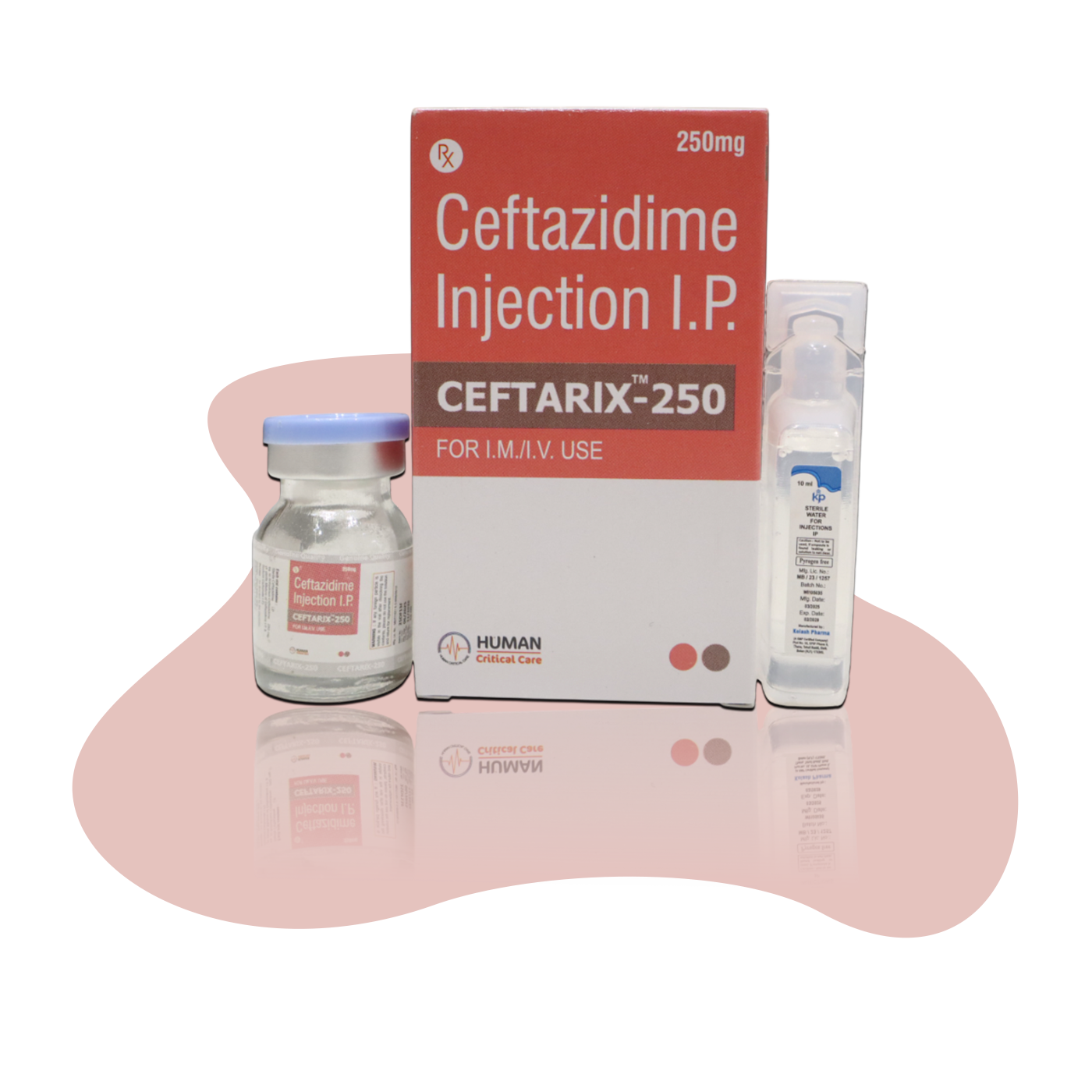
Ceftazidime is a third-generation cephalosporin antibiotic. It works by inhibiting the synthesis of bacterial cell walls, which leads to the death of susceptible bacteria. It is bactericidal (kills bacteria) and is effective against a broad range of Gram-negative and some Gram-positive bacteria, including Pseudomonas aeruginosa.
The injection is usually available as a sterile powder that is reconstituted with a suitable diluent (e.g., sterile water or saline) before intravenous (IV) or intramuscular (IM) administration.
Mechanism of Action:
Ceftazidime binds to penicillin-binding proteins (PBPs) in bacteria.
Inhibits the final step of bacterial cell wall synthesis.
Leads to cell lysis and bacterial death.
Ceftazidime 250 mg injection is commonly used to treat serious bacterial infections, including:
Respiratory Tract Infections:
Pneumonia, bronchitis, and infections in cystic fibrosis patients.